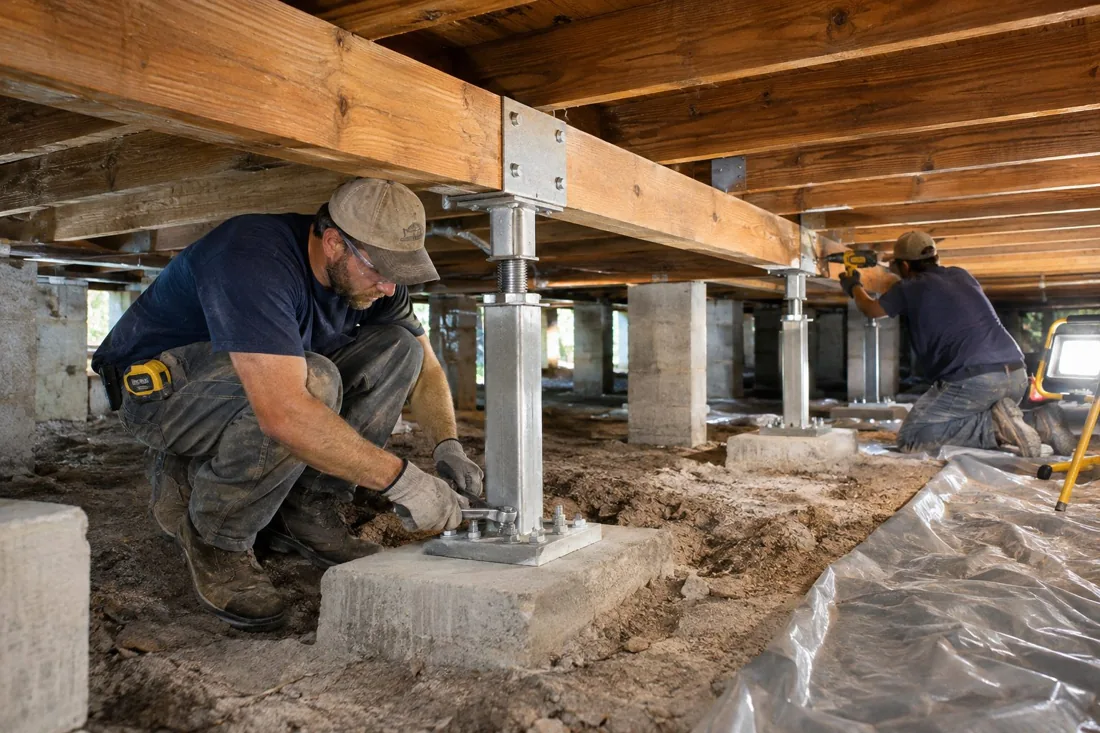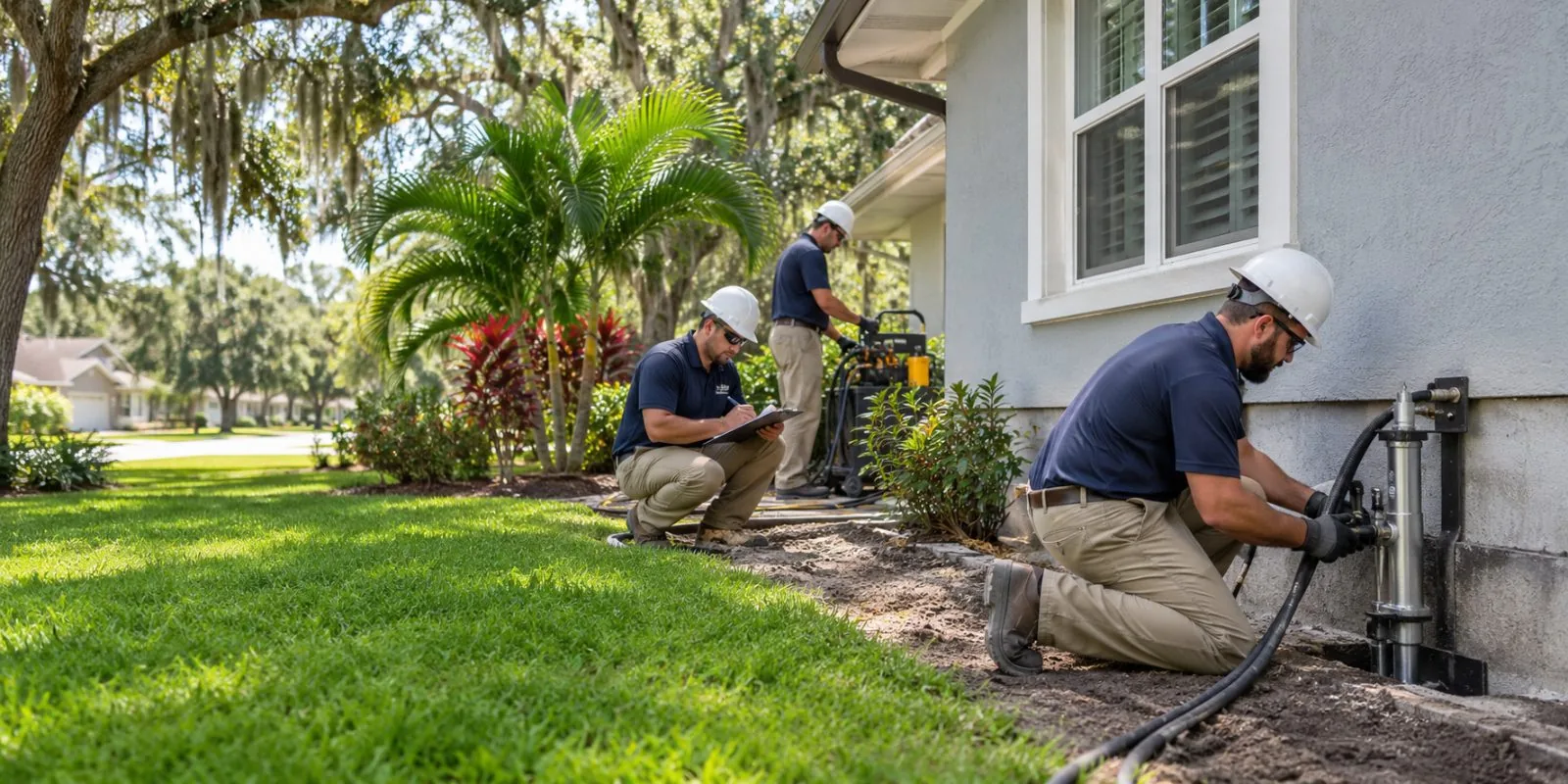
Support Your Home From Below
Slab Foundation Repair in Tampa, FL
Get help with a cracked or settling slab.
Repairing Settling Concrete Slab Foundations
Concrete slab foundations are widely used in Tampa residential construction. They provide a solid base for the home when the soil beneath them offers consistent support. When that support changes, portions of the slab can settle, crack, or become uneven.
Tampa Bay Foundation Repair helps homeowners evaluate slab foundation concerns and understand the available corrective measures. An evaluation considers both the concrete and the conditions beneath it.
Signs Your Slab Foundation May Be Moving
Slab settlement can appear as cracks in floor tiles, gaps beneath baseboards, doors that rub against their frames, or floors that slope toward a particular area. Exterior wall cracking may also accompany movement beneath the slab.
A damaged floor covering does not automatically indicate structural settlement. However, several symptoms occurring together may justify a closer look at the foundation.
Why Concrete Slabs Settle in Tampa
Soil beneath a slab can lose support through erosion, inadequate compaction, or changes in moisture conditions. Plumbing leaks can introduce water beneath a building, while poorly managed roof runoff may contribute to erosion around its perimeter.
Properties built on fill may experience settlement if the supporting material was not adequately prepared. These conditions can develop gradually and may affect only one portion of the building.
Slab Settlement Versus Concrete Shrinkage
Concrete can develop cracks during curing without experiencing significant settlement. Shrinkage cracks may remain relatively stable and show little vertical displacement.
Settlement-related cracks may be accompanied by differences in floor elevation or changes in nearby walls. Evaluating these related symptoms helps determine whether the slab requires structural attention.
Stabilization and Lifting Are Different Goals
Stabilizing a slab involves reducing the potential for continued movement by improving its support. Lifting attempts to recover some lost elevation where the structure and site conditions allow it.
Not every slab should be lifted. Existing finishes, plumbing, walls, and structural connections can limit how much adjustment is appropriate. A repair plan should establish realistic objectives before work begins.
Tampa Bay Foundation Repair Area Guides
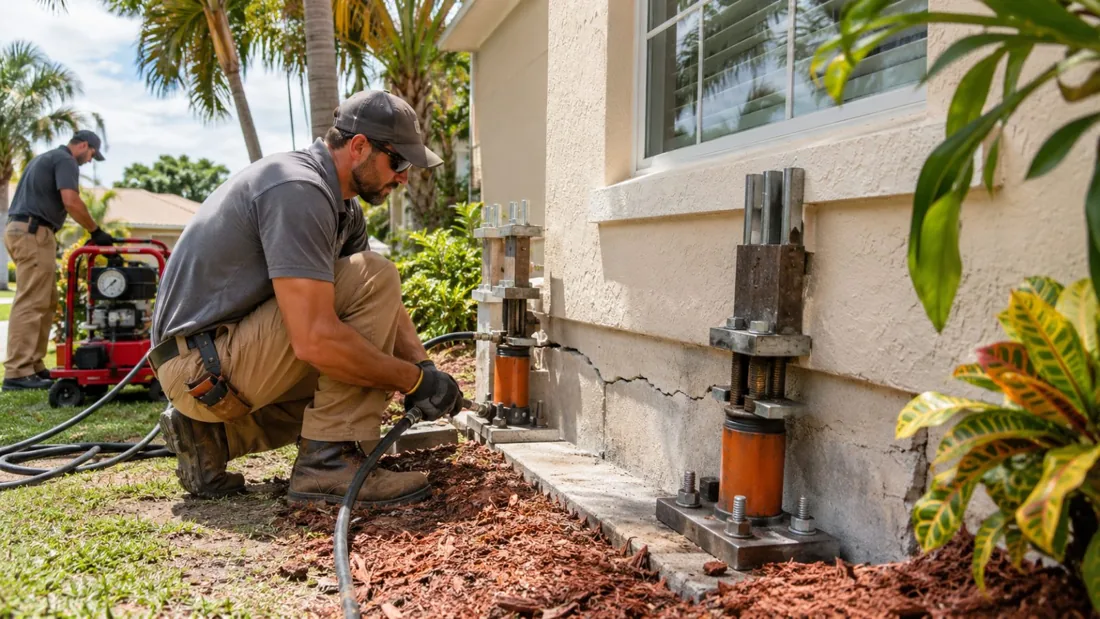
Slab Foundation Repair Methods
The appropriate method depends on the slab's construction, the location of settlement, and the condition of the supporting soils.
Slab support restoration
Where a concrete slab has lost support, restoring contact with suitable supporting material may help reduce additional movement. The repair must account for the location and extent of the affected area. An evaluation helps determine whether localized support restoration is appropriate or whether the foundation requires a more extensive structural solution. The slab's thickness, reinforcement, and load-bearing responsibilities are important considerations.
Void filling beneath concrete
Voids can develop beneath slabs when supporting soil settles or washes away. Certain void-filling methods may be suitable for restoring support where the surrounding conditions allow their use. Filling a void does not necessarily correct deeper soil instability or an active source of erosion. The underlying conditions should be considered before selecting a material or repair method.
Controlled slab lifting
Some settled slabs may be suitable for controlled lifting. The purpose is to improve elevation while avoiding unnecessary stress on the surrounding structure. The achievable adjustment depends on the condition of the concrete, structural connections, and other building components. Complete restoration to the original elevation is not always practical or advisable.
Load-bearing slab stabilization
Slabs that support structural walls require particular attention when settlement occurs. Their repair may involve transferring loads to more suitable supporting materials or providing additional foundation support. Because structural loads are involved, the repair may require engineering evaluation and a designed stabilization system. The solution should address the building as a whole rather than treating the slab as an isolated concrete surface.
What to Look for in a Repair Proposal?
Focus on slab support
A qualified evaluator can consider what is happening beneath the concrete as well as the damage visible above it.
Realistic lifting objectives
A qualified evaluator can recognize that stabilization may be more appropriate than attempting to recover every difference in floor elevation.
Consideration of surrounding construction
Repair planning accounts for walls, flooring, plumbing, and other components that may be affected by slab movement.
Common questions about slab foundation repair
Can a plumbing leak contribute to slab settlement?
Water from a damaged line can change soil conditions or carry away supporting material. A plumber can help locate a suspected leak, and a foundation evaluator can assess what support has been lost.
Should a sunken patio and the house slab be evaluated together?
Record symptoms in both areas. A patio may move on its own support, so ask the evaluator which slab carries the home and whether the two are structurally connected.
Read about repair cost factors or ask about foundation repair.
Discuss your foundation concerns
Ask a question about your foundation or learn what to prepare for an evaluation.
Contact Gerard DigitalThe Slab Foundation Repair Process
Discuss the symptoms
Identify affected rooms, visible cracks, uneven surfaces, and changes noticed by the homeowner.
Evaluate slab conditions
Review accessible foundation areas and consider whether settlement or loss of support is present.
Establish repair objectives
Determine whether the goal should involve stabilization, support restoration, lifting, or further investigation.
Complete the agreed work
Perform the selected repair and discuss relevant limitations and future maintenance considerations.