Stronger Support Beneath Raised Homes
Crawl Space Foundation Repair in Tampa, FL
Get help with sagging floors and damaged supports.
Repairing the Structure Beneath Your Floors
Homes built over crawl spaces rely on a combination of foundation walls, piers, beams, and floor framing. When these components deteriorate or lose support, the effects can become noticeable throughout the living space.
Tampa Bay Foundation Repair addresses crawl space foundation concerns with attention to structural support and the conditions beneath the home. Older raised houses and properties with additions may require particularly careful evaluation.
Signs of Crawl Space Foundation Problems
Floors that bounce, sag, or slope can indicate problems within the supporting structure. Interior doors may become difficult to operate, and gaps can appear between walls and floors.
Visible deterioration beneath the house, displaced masonry piers, and damaged support posts are additional concerns. Some problems remain hidden until an accessible crawl space is examined.
Tampa's Humidity and Raised Foundations
Warm temperatures and humid conditions can contribute to moisture accumulation beneath raised homes. Poor drainage, plumbing leaks, and inadequate moisture management may increase the risk of deterioration in susceptible materials.
Structural repairs should account for these conditions. Replacing a damaged support without addressing the moisture exposure that contributed to its deterioration may leave the new component vulnerable.
Foundation Movement Versus Floor Framing Damage
A sagging floor does not always mean the entire foundation is settling. The problem may involve a beam, floor joist, support post, or connection within the framing system.
Distinguishing between foundation settlement and framing deterioration helps establish the correct scope of repair. Some homes experience a combination of both.
Older Homes and Previous Repairs
Established Tampa neighborhoods contain raised houses that may have undergone multiple renovations. Changes to interior walls, additions, and previous foundation repairs can affect how loads are transferred beneath the building.
An evaluation should consider existing alterations rather than assuming that every support remains in its original configuration.
Tampa Bay Foundation Repair Area Guides
Crawl Space Structural Repair Solutions
Repairing a crawl space foundation involves understanding how the floor system and foundation work together. Solutions should address the affected structural components and relevant environmental conditions.
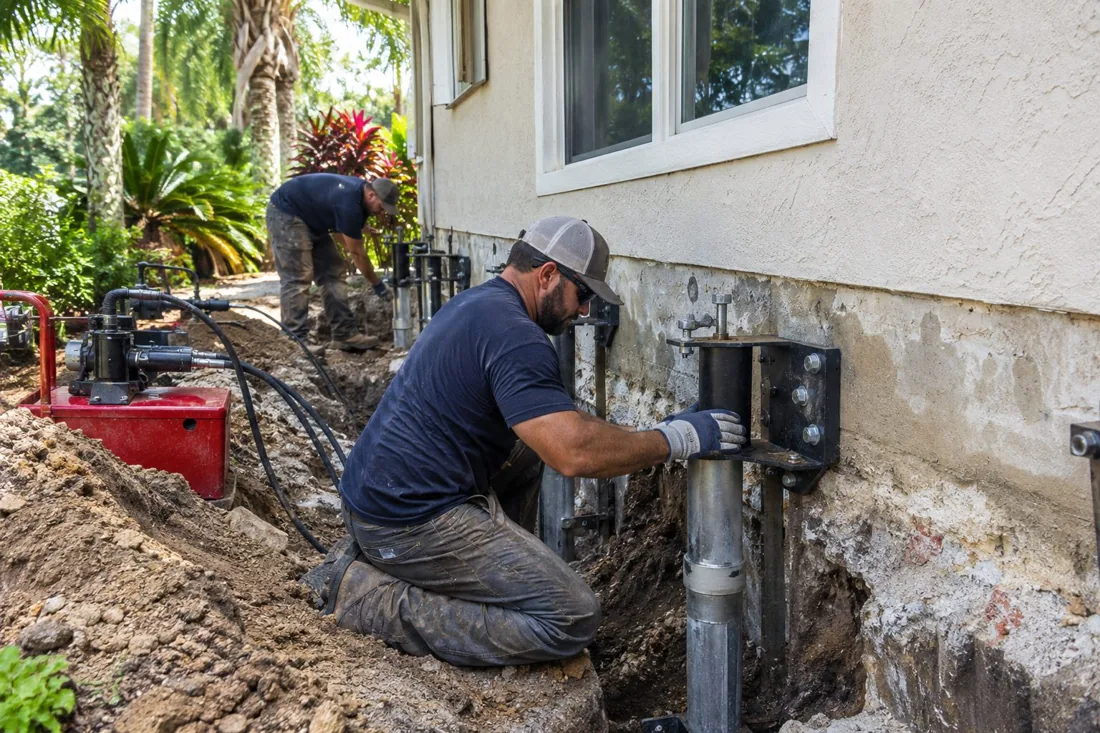
Foundation pier repair
Masonry or concrete piers beneath raised homes can experience settlement, cracking, or displacement. Their condition influences how effectively they support the beams above them. Repair may involve restoring damaged material, improving the supporting footing, or replacing unsuitable components. The appropriate method depends on the loads carried by the pier and the condition of the surrounding structure.
Support post replacement
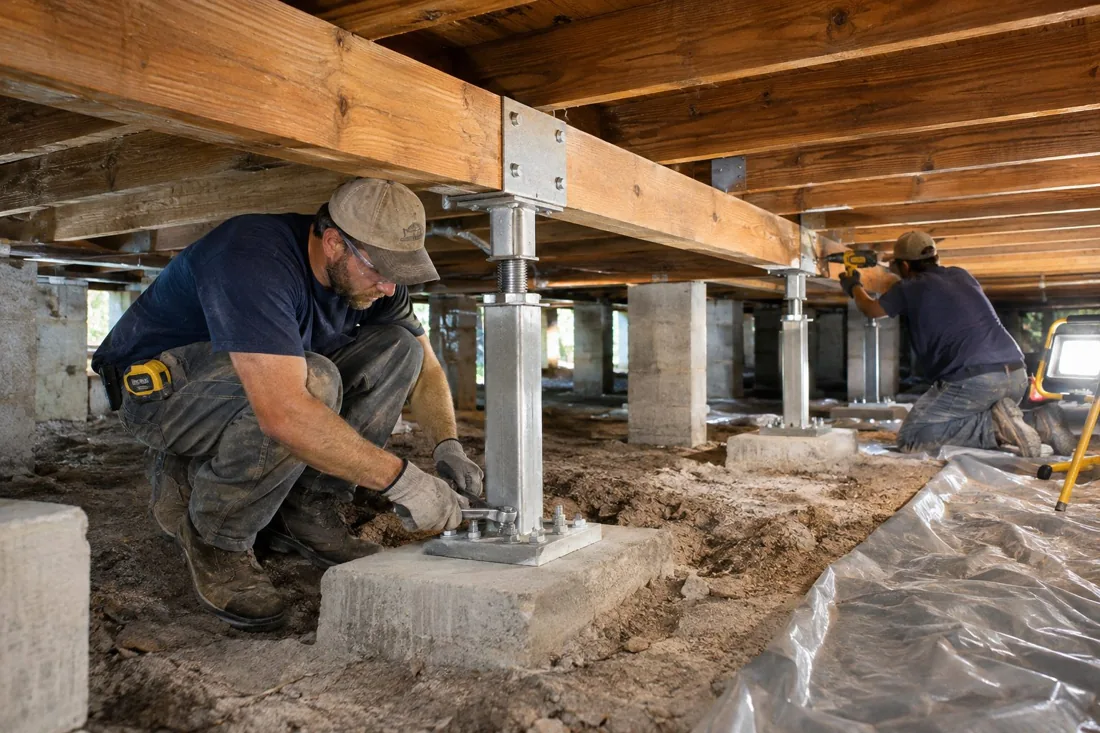
Damaged or inadequately supported posts can contribute to sagging floors. Replacing a post requires consideration of its load, bearing surfaces, connections, and exposure to moisture. A replacement support should not simply rest on loose soil or an unsuitable surface. Its footing and connection details need to provide a reliable load path through the foundation.
Beam and floor support repairs
Beams and floor framing can become damaged through deterioration, excessive loading, or inadequate support. Repairs may involve reinforcing or replacing affected components where appropriate. Before changing the floor system, it is important to understand how it interacts with walls and other structural elements. Significant framing damage may require additional specialist assessment.
Sagging floor stabilization
Correcting a sagging floor begins with identifying which components have moved or deteriorated. Additional supports may be suitable when the existing foundation and framing can accommodate them. The amount of floor adjustment should be considered carefully. Sudden or excessive lifting can affect finishes, doors, plumbing, and other connected building components.
What to Look for in a Repair Proposal?
Attention to the complete support system
A qualified evaluator can consider how piers, posts, beams, and floor framing interact beneath the home.
Moisture-aware repair planning
Crawl space conditions are considered alongside structural damage because moisture can influence long-term performance.
Respect for older construction
Raised homes may contain original materials and previous modifications that need to be considered before repairs begin.
Common questions about crawl space foundation repair
Will a moisture barrier fix a sagging floor?
A moisture barrier may help manage ground moisture. Ask an evaluator to check beams, joists, piers, and connections to determine whether existing structural damage also requires repair.
What if the crawl space is too low to inspect?
Identify the accessible entry points without going inside. Ask what areas can be observed safely, whether remote imaging is useful, and what limits should be recorded in the inspection report.
Read about repair cost factors or ask about foundation repair.
Discuss your foundation concerns
Ask a question about your foundation or learn what to prepare for an evaluation.
Contact Gerard DigitalThe Crawl Space Foundation Repair Process
Review interior symptoms
Discuss uneven floors, movement, sticking doors, and other concerns within the living space.
Examine accessible supports
Evaluate safely accessible crawl space components and identify visible deterioration or movement.
Plan the structural repair
Discuss suitable support repairs and any moisture-related conditions that need separate attention.
Complete the support work
Address the agreed structural components and explain relevant monitoring or maintenance recommendations.