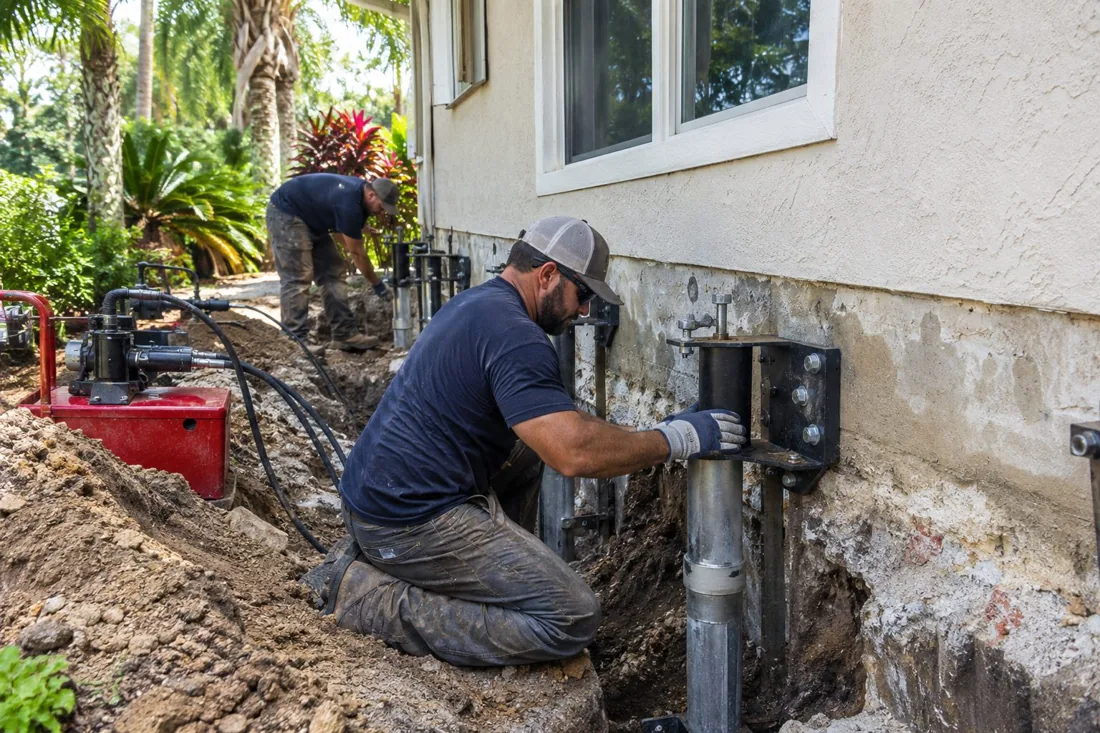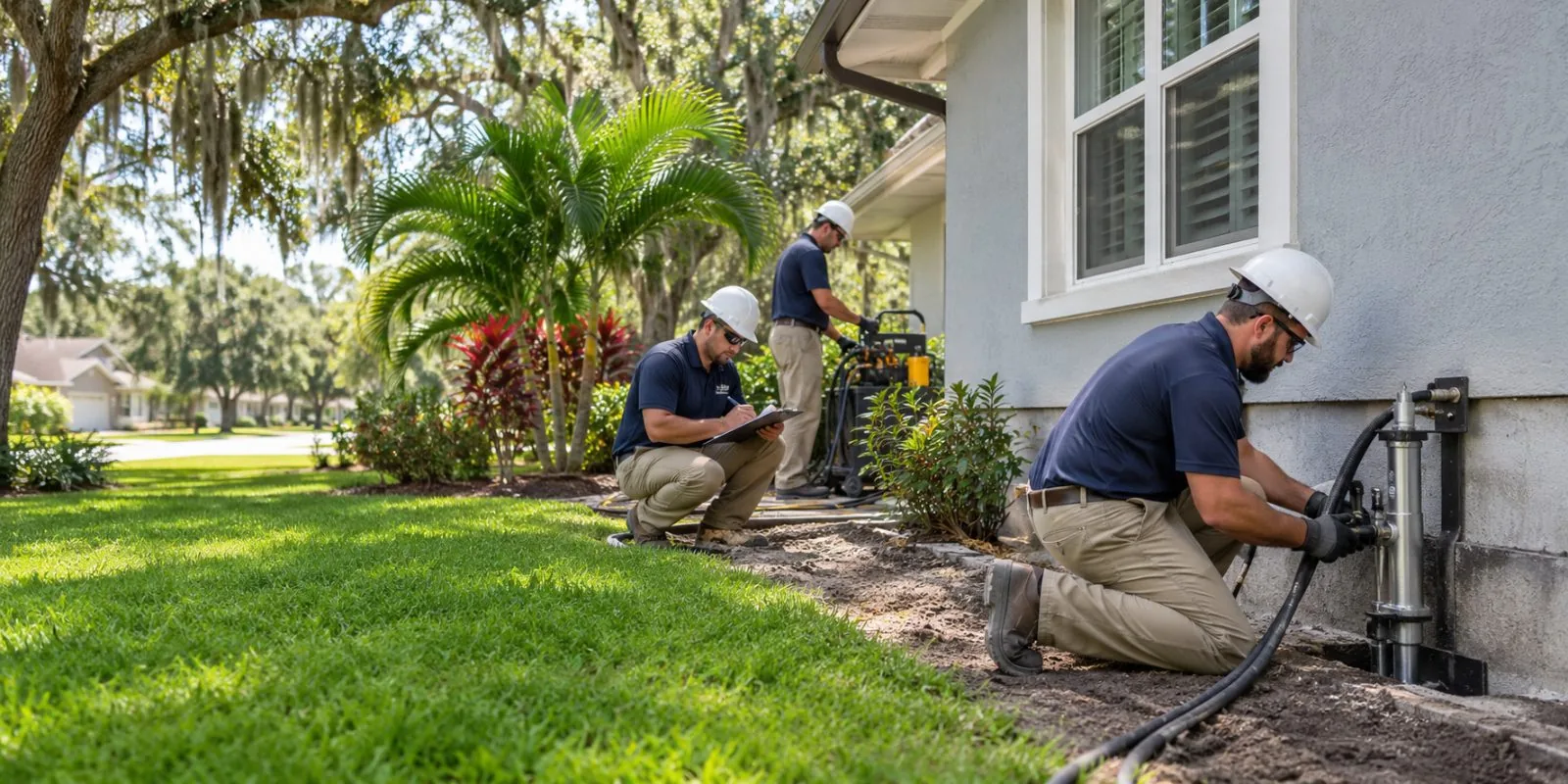
Structural Foundation Repair Solutions
Foundation Repair Services and Solutions in Tampa, FL
Get a repair plan for your home's foundation.
Structural Repairs for Damaged and Settling Foundations
A foundation repair project should address the structural condition of the building, not simply the appearance of the damage. When foundation components move, deteriorate, or lose support, the appropriate repair depends on how the structure transfers its loads to the ground.
Tampa Bay Foundation Repair provides residential foundation repair services focused on identifying affected components and discussing practical corrective measures. The repair scope may involve a localized section of the foundation or a more extensive stabilization plan.
When Foundation Repair Becomes Necessary
Foundation repairs may be appropriate when structural movement continues, supporting components deteriorate, or portions of the building can no longer maintain adequate support.
Warning signs include significant masonry displacement, increasing differences in floor elevation, separation between structural sections, and recurring damage across multiple rooms.
These symptoms need to be evaluated in context. A building may contain old, stable settlement that does not require the same intervention as active movement.
Understanding Differential Settlement
Differential settlement occurs when one portion of a foundation moves differently from another. The resulting stress can affect walls, floors, openings, and structural connections.
Repairing differential settlement requires understanding which sections have moved and how those sections interact with the rest of the building. The objective is to establish suitable support while avoiding unnecessary stress on adjacent components.
Structural Damage and Cosmetic Damage
Foundation movement can create visible damage in materials that are not themselves responsible for supporting the building. Drywall cracks, damaged tile, and separated trim are common examples.
These cosmetic symptoms can provide useful clues, but repairing them does not necessarily restore structural performance. Foundation repairs should address the affected support system before cosmetic restoration is considered.
Planning Repairs Around Existing Construction
Residential foundations support more than exterior walls. Interior load-bearing walls, columns, roof structures, and additions may depend on different portions of the foundation.
A repair plan should consider these load paths and identify how the proposed work will affect connected building components. Structural engineering may be required where significant changes to the support system are involved.
When Further Investigation Is Needed
Some foundation conditions cannot be adequately understood through visible observations alone. Unexplained settlement, unusual ground depressions, and significant structural damage may require geotechnical or engineering investigation.
Establishing the cause before selecting a repair can help avoid unnecessary work and reduce the risk of addressing the wrong problem.
Tampa Bay Foundation Repair Area Guides
Residential Foundation Repair Applications
An evaluation considers the building's existing support system, the location of damage, and the intended structural outcome.
Foundation settlement stabilization
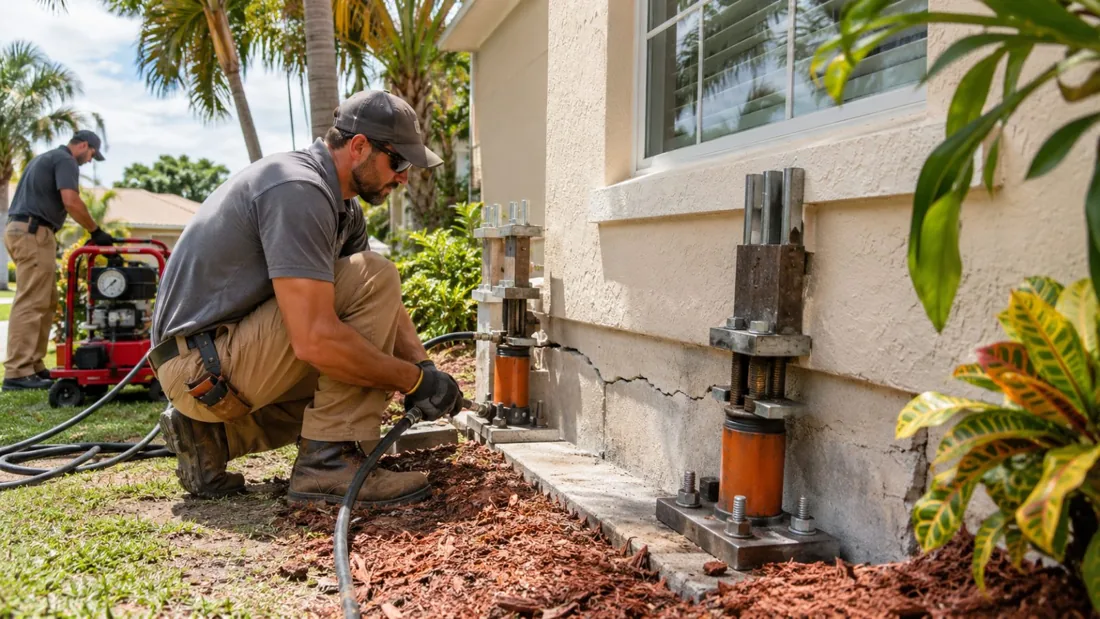
Settlement stabilization focuses on improving support beneath portions of a building that have moved. The selected method should account for the condition of the foundation and the suitability of the supporting ground. The goal may be to limit additional movement rather than recover all lost elevation. The building's existing condition influences what can reasonably be achieved.
Damaged footing repair
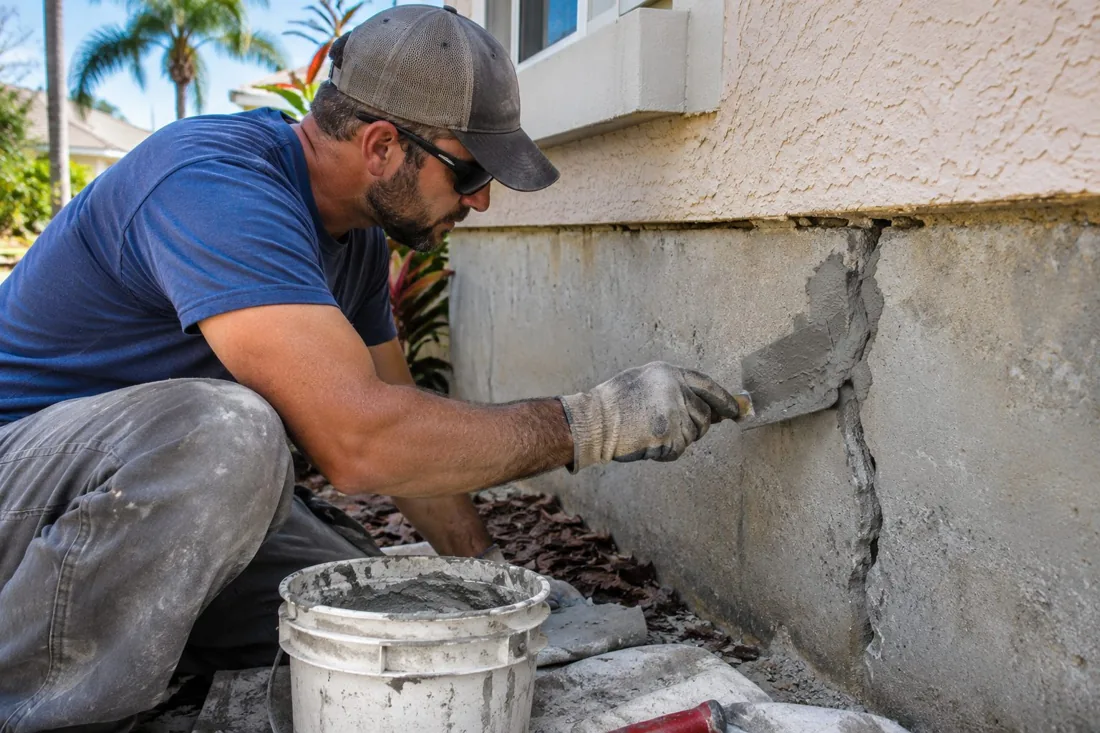
Footings distribute structural loads into the supporting soil. Damage, inadequate support, or deterioration can affect their ability to perform this function. Repairs may involve restoring damaged components or providing additional structural support. Significant footing modifications should follow an appropriate assessment and any necessary engineering requirements.
Foundation wall stabilization
Foundation walls can develop cracking, displacement, or deterioration that affects their structural performance. The appropriate repair depends on the wall's construction and the forces acting upon it. A stabilization plan should address the cause of movement and determine whether reinforcement, material restoration, or additional support is needed.
Foundation repairs for additions
Home additions sometimes move differently from the original building because they have separate foundations or were constructed under different site conditions. Damage may appear where the two structures meet. Repair planning should account for both foundation systems and their connections. Stabilizing one section without considering the other may not resolve movement at the transition.
What to Look for in a Repair Proposal?
Structural repair focus
A qualified evaluator can distinguish between repairing visible finishes and addressing the foundation components responsible for supporting the home.
Individual repair scopes
The proposed work reflects the location and extent of the foundation concern rather than an automatic whole-house solution.
Appropriate specialist involvement
A qualified evaluator can recognize when additional structural or geotechnical evaluation may be necessary before repair decisions can be made.
Common questions about foundation repair
Can foundation work happen in stages?
Some work can be staged if the repair design accounts for the load path at every stage. Ask which stages depend on one another and whether any part of the building needs temporary support.
What paperwork should I keep after a repair?
Retain inspection reports, plans, permits, change orders, photographs, and written warranty terms. Future buyers or evaluators can use those records to understand what was done and which areas were outside the scope.
Read about repair cost factors or ask about foundation repair.
Discuss your foundation concerns
Ask a question about your foundation or learn what to prepare for an evaluation.
Contact Gerard DigitalThe Structural Foundation Repair Process
Establish the problem
Review the history of visible damage and identify the affected foundation areas.
Evaluate repair requirements
Consider structural support, site conditions, and whether further technical assessment is needed.
Define the scope of work
Explain the proposed repair, its intended outcome, and the limitations relevant to the property.
Perform the foundation repairs
Complete the agreed work and discuss any remaining maintenance, monitoring, or cosmetic restoration considerations.