Address Cracks Before They Worsen
Foundation Crack Repair in Tampa, FL
Find out what your foundation cracks mean.
Understand the Crack Before Repairing It
A crack in your foundation can be a minor material defect or a warning sign of structural movement. The difference matters because simply covering a crack does not necessarily correct the condition that caused it.
Tampa Bay Foundation Repair provides foundation crack repair services for homes throughout Tampa and surrounding communities. A qualified evaluator can consider the location, pattern, and condition of the damage before discussing appropriate repair methods.
When Foundation Cracks Need Attention
Cracks that become wider, extend through multiple building materials, or appear alongside sticking doors and uneven floors warrant closer evaluation. Horizontal cracking, displaced masonry, and noticeable changes in wall alignment can also indicate conditions requiring specialist assessment.
A crack that remains unchanged for an extended period may have a different significance from one that develops rapidly. Photographs and measurements taken over time can provide useful information.
Common Foundation Cracks in Tampa Homes
Concrete block construction is common throughout the Tampa area. When different sections of a foundation move at different rates, cracks may follow mortar joints in a stair-step pattern. Slab foundations can also develop cracks across their surfaces or around their edges.
Vertical cracks sometimes develop from concrete shrinkage or localized movement. Diagonal cracks around window and door openings may reflect stress concentrations within the wall. The appearance alone is not enough to establish the cause.
Why Cracks Return After Cosmetic Repairs
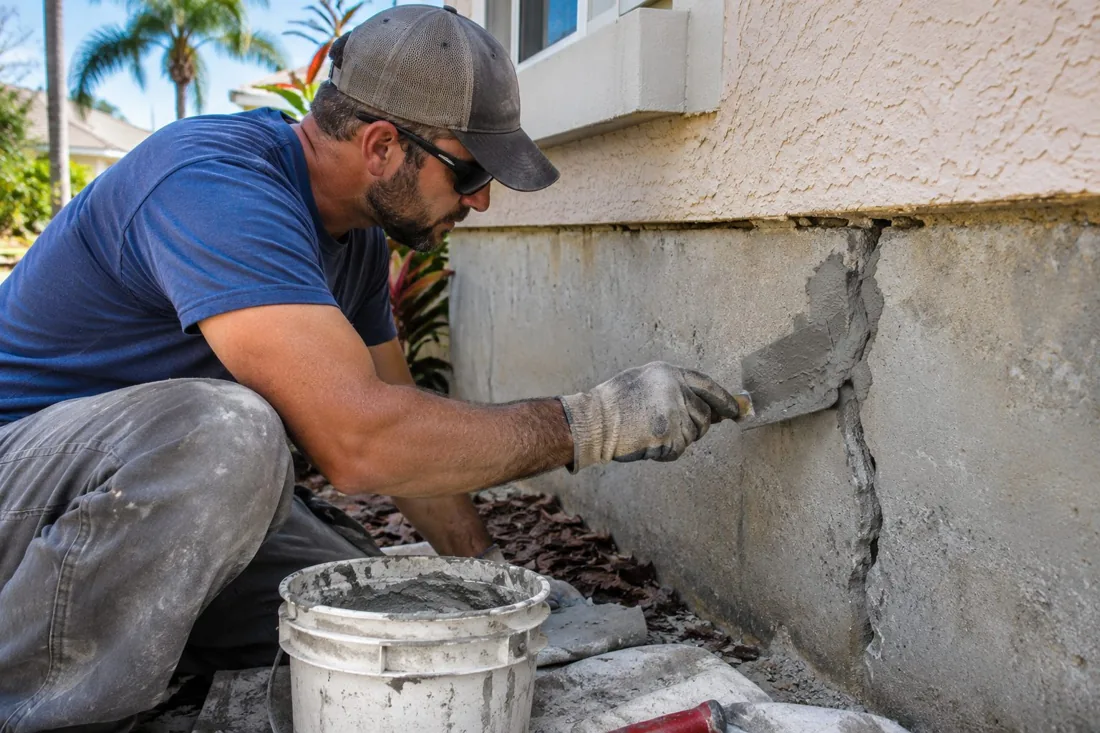
Patching drywall, applying new stucco, or filling a masonry crack can improve appearance temporarily. However, if the supporting foundation continues to move, the repaired area may crack again.
Recurring damage is a reason to investigate whether settlement, drainage problems, or another underlying condition is present. Repairing the foundation first may help reduce repeated cosmetic work.
Moisture and Foundation Cracks
Tampa's seasonal rainfall makes moisture intrusion an important consideration. Openings in concrete and masonry can allow water to enter vulnerable areas, depending on their location and exposure.
A suitable repair needs to consider whether the crack is actively moving and whether water pressure or drainage conditions are involved. Materials intended for stable cracks may not perform appropriately where movement continues.
Tampa Bay Foundation Repair Area Guides
Foundation Crack Repair Options
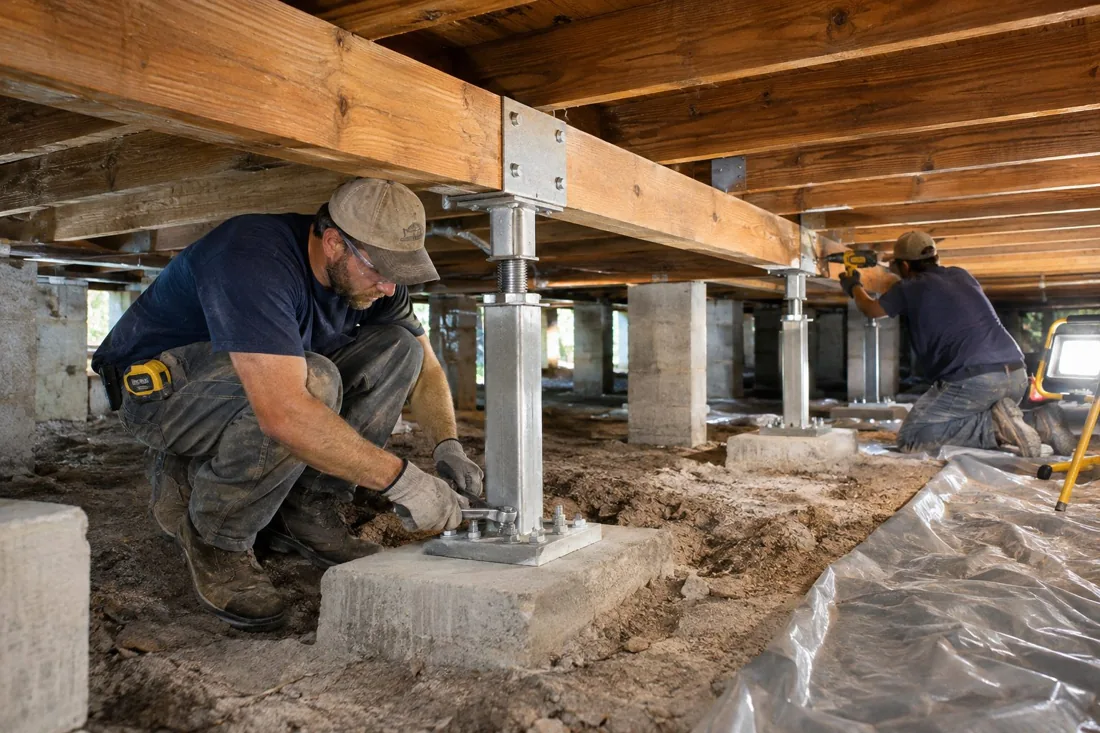
Different cracks require different repair approaches. The objective may be sealing an opening, restoring damaged material, stabilizing the supporting structure, or combining several corrective measures.
Concrete crack sealing
Stable cracks in concrete may be suitable for sealing with materials selected for the crack's width, depth, and exposure. Sealing can help reduce moisture entry and protect the damaged area from further deterioration. Before applying a repair material, it is important to determine whether the crack is still moving. A surface seal is not a substitute for structural stabilization when the foundation has lost support.
Structural crack repair
Some cracks affect the continuity of structural concrete or masonry. Depending on the condition, an appropriate repair may involve injection materials, reinforcement, or other measures intended to restore performance. Structural repairs should follow a suitable assessment of the damaged component. Additional engineering guidance may be necessary when the extent of damage or the loads carried by the foundation are uncertain.
Stair-step masonry crack repair
Stair-step cracks often follow the mortar joints between concrete blocks or bricks. They may develop when one portion of a building moves differently from another. Repairing the masonry without considering foundation movement can lead to recurring damage. The repair plan should establish whether the supporting structure needs stabilization before damaged joints or blocks are restored.
Cracks associated with settlement
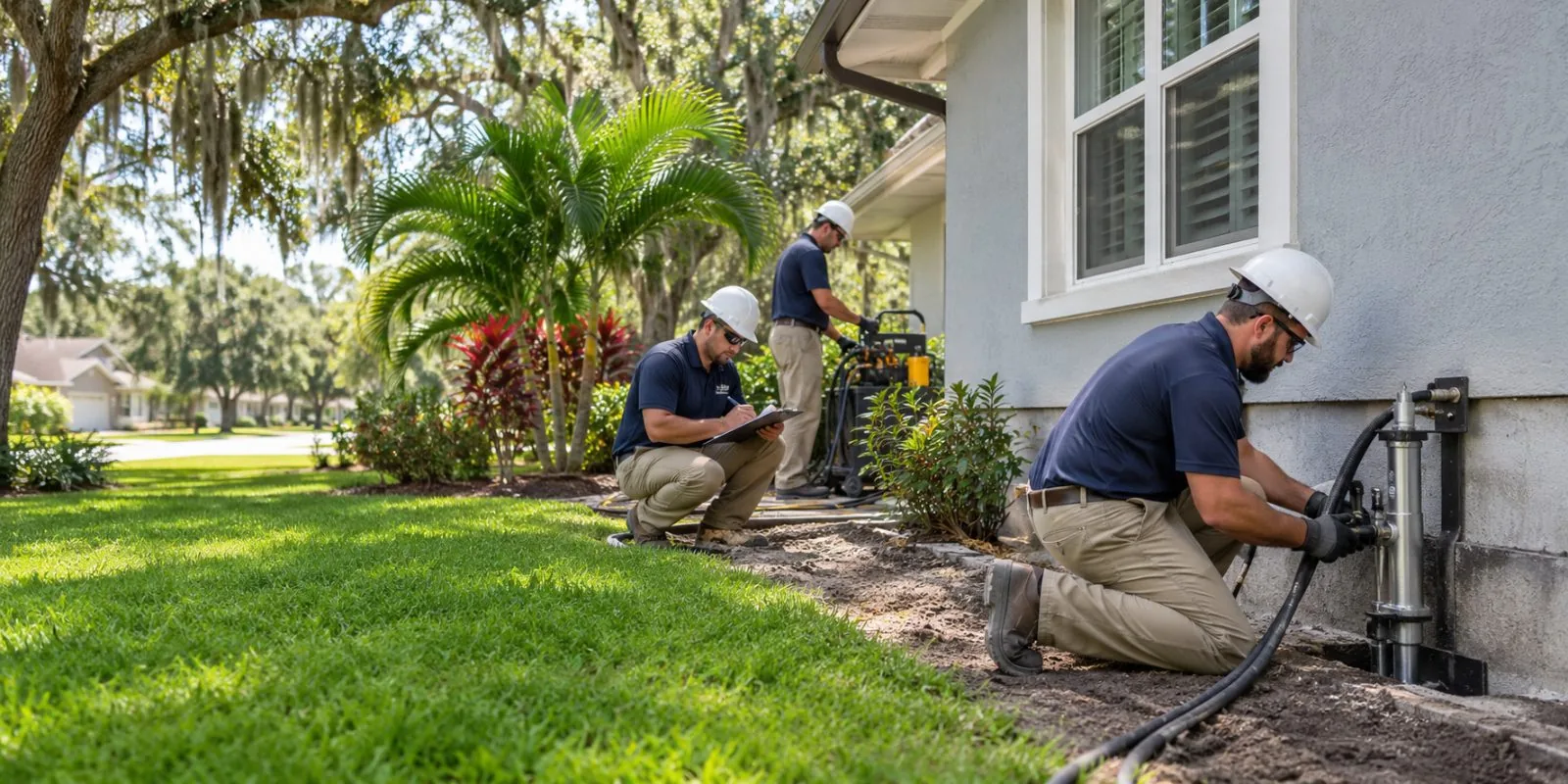
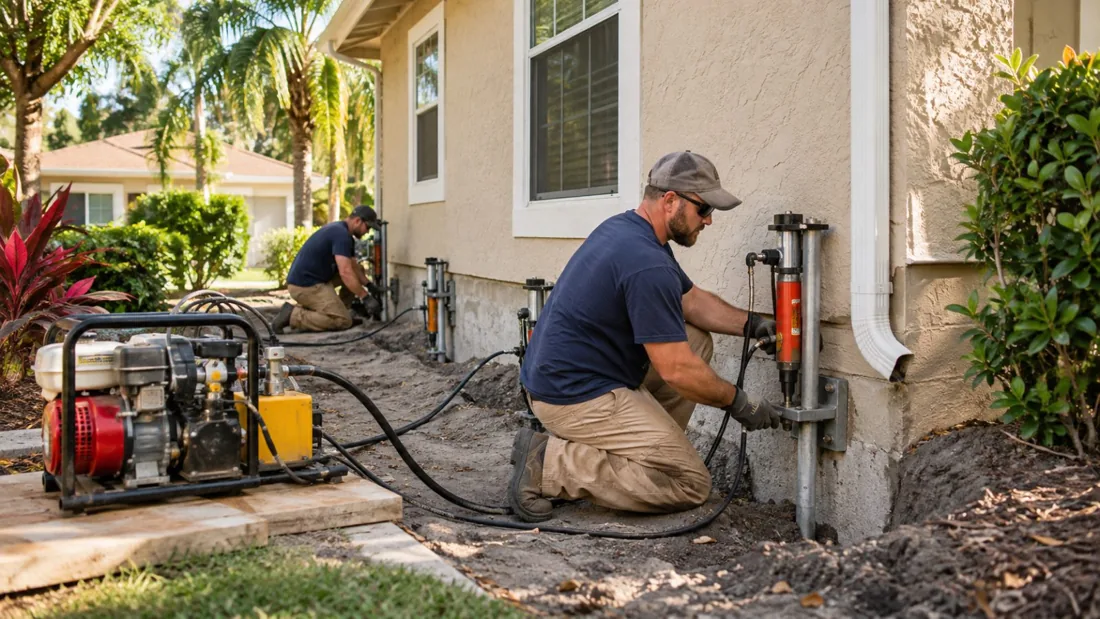
Settlement-related cracks require attention to the support beneath the affected foundation. If soil movement is continuing, crack repair alone may provide limited benefit. The appropriate approach may include foundation stabilization followed by repairs to damaged materials. The sequence of work depends on the structure and the condition of the foundation.
What to Look for in a Repair Proposal?
Crack-specific evaluation
A qualified evaluator can consider the characteristics of each crack rather than assuming that all visible damage has the same cause.
Attention to recurring damage
A qualified evaluator can take previous patching and repeated cracking into account when discussing repair options.
Appropriate repair materials
The intended repair should reflect the condition of the material, its exposure, and whether movement is present.
Common questions about foundation crack repair
Should I fill a crack before it is inspected?
Photograph and measure the crack first. Sealing can hide evidence of displacement or water entry. If the crack is changing or accompanied by other movement, ask a professional to evaluate it before covering it.
What is useful to show in photos of a crack?
Include one photo of the full wall and one close photo with a scale. Note whether the crack crosses mortar, block, concrete, or a finish and whether the two sides are offset.
Read about repair cost factors or ask about foundation repair.
Discuss your foundation concerns
Ask a question about your foundation or learn what to prepare for an evaluation.
Contact Gerard DigitalThe Foundation Crack Repair Process
Review the visible damage
Discuss when the cracks appeared and examine their location, pattern, and surrounding conditions.
Consider the underlying cause
Look for related signs of settlement, moisture intrusion, or movement elsewhere in the building.
Determine suitable repairs
Discuss whether sealing, structural repair, stabilization, or further specialist evaluation is appropriate.
Address the damaged area
Carry out the agreed repair and explain any recommended monitoring or follow-up measures.